If your Chicago rental sits empty for even a few extra weeks, the cost adds up fast. In a market where renters compare listings online and often make decisions quickly, a unit that looks clean, bright, and complete can stand out right away. The good news is that getting market-ready does not have to be complicated if you focus on the updates that matter most. Here’s how to prepare your Chicago rental property for listing, showings, and a smoother lease-up process.
Why market-ready matters in Chicago
Chicago remains an active rental market, and presentation plays a real role in how fast your property gets attention. According to the Apartments.com National Rent Trends Report, Chicago posted an average rent of $2,009 with year-over-year rent growth of 3.6% in March 2026.
That same research also shows that renters rely heavily on online search tools, and they care most about price, photos, and availability. If your listing is missing strong visuals or your unit looks unfinished, renters may move on before they ever schedule a tour.
Timing matters too. Apartments.com renter research found that many renters expect their search to wrap up within two months or less, and in-person tours remain the preferred format. That means you want your property ready to photograph, easy to evaluate online, and smooth to show in person.
Start with a full turnover checklist
Before you think about photos or pricing, focus on the physical condition of the unit. Chicago inspection records regularly flag issues like debris, peeling paint, broken windows, leaking pipes, exposed wiring, and missing smoke or carbon monoxide alarms. Those recurring problems make a strong starting point for your turnover checklist.
Deep clean every visible surface
A quick wipe-down is usually not enough between tenants. You want the home to feel fresh, cared for, and ready for immediate occupancy.
Your cleaning checklist should include:
- Floors and baseboards
- Windows and window tracks
- Closets and shelving
- Kitchen appliances and cabinets
- Bathroom fixtures and tile
- Vents and fans
- Entryways, stairwells, and common areas
If the property includes basement, storage, or utility areas, clear those out too. Chicago inspection records show that unsanitary and cluttered shared spaces often draw attention.
Repair what renters will notice fast
Visible wear can make a unit feel older or poorly maintained, even when the layout and location are strong. Small fixes often have an outsized impact on how a property shows.
Prioritize repairs such as:
- Touching up paint
- Fixing wall and ceiling defects
- Replacing broken hardware
- Repairing dripping faucets or leaking pipes
- Re-caulking tubs and sinks
- Repairing damaged doors or windows
- Addressing exposed wiring or other safety concerns
Under Chicago rules, landlords must maintain the premises in compliance with the municipal code and make repairs promptly. You can review that obligation in the Chicago landlord-tenant code.
Brighten the space before photos
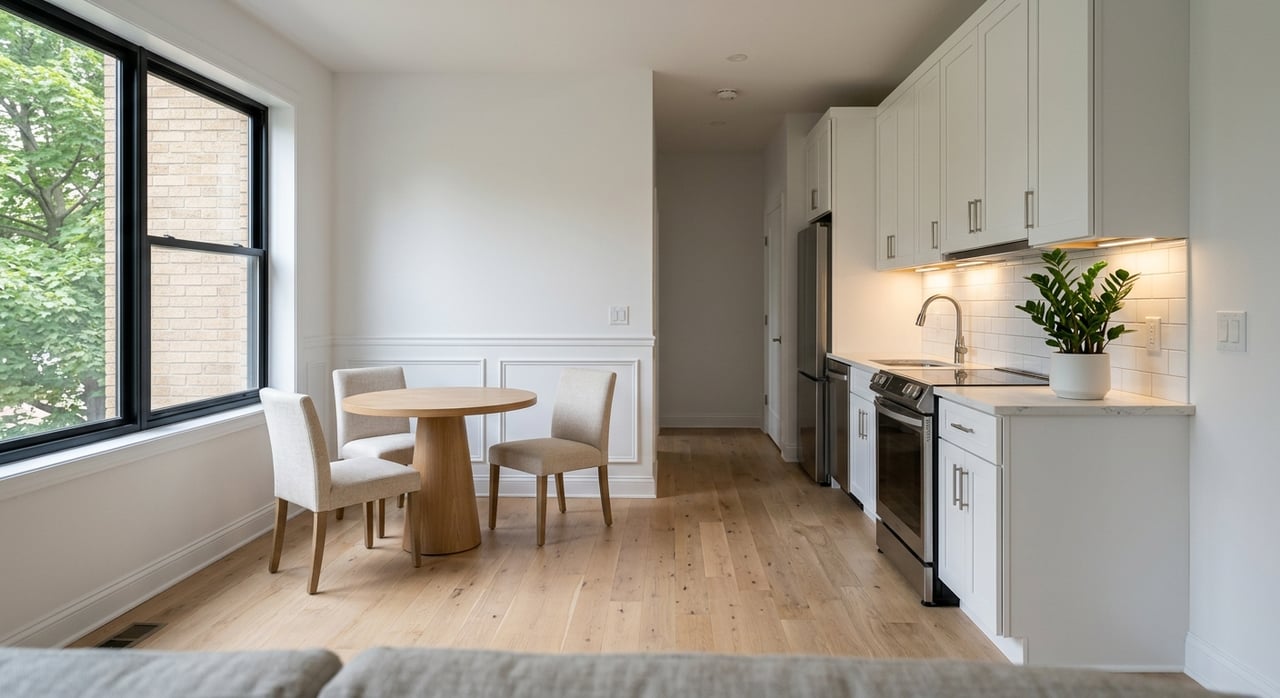
Renters often decide whether to book a showing based on listing photos alone. A dark or cluttered room can make even a well-located unit feel less appealing online.
Before photography, make sure the unit is:
- Odor-free
- Free of personal items and leftover storage
- Well-lit with blinds or curtains open
- Set up to show clear walking paths and room size
The goal is simple: help renters understand the space quickly.
Check Chicago compliance before listing
A market-ready rental in Chicago is not just clean and attractive. It also needs to be prepared with local rules in mind.
Chicago’s Residential Landlord and Tenant Ordinance applies to most rental agreements in the city and is designed to support health, safety, and housing quality. Before your listing goes live, review these key checkpoints.
Confirm required safety items
Safety basics should be verified before you begin showings. Inspection records repeatedly reference the importance of smoke detectors in dwelling units and carbon monoxide detectors within 40 feet of sleeping rooms where fossil-fuel heating or a heat-exchange system is present. See the city’s inspection example here.
It is smart to test and replace devices as needed before the first tour. This helps protect the property, supports habitability, and reduces last-minute delays.
Prepare lease and disclosure documents
Turnover is the right time to get organized on paperwork, not after you find a renter. Chicago requires landlords to provide certain written information, including the name, address, and telephone number of the owner or manager and the person authorized to receive notices. That requirement is outlined in the Chicago code here.
Chicago also requires that an ordinance summary be attached to each written rental agreement when initially offered, including renewals. You can review that requirement in the ordinance summary rule.
If you collect a security deposit, make sure your handling process follows the city’s rules on receipts, account requirements, and related compliance. The security deposit section of the code is worth reviewing before marketing begins.
Review access and turnover timing
If your current tenant is still in place, timing and access matter. Chicago states that landlords may generally enter for repairs, inspections, and showings with at least two days’ notice, and entry between 8:00 a.m. and 8:00 p.m. is presumed reasonable under the city’s access standard.
Chicago also prohibits lockouts and interruption of essential services like water, gas, plumbing, electricity, and heat under the prohibition on unlawful interruption. In practice, turnover work should be coordinated only after lawful possession has ended or after proper access is arranged.
Don’t overlook older-building disclosures
If your rental was built before 1978, federal law may require lead-based paint disclosure before lease signing. The EPA explains that landlords must provide available records, an EPA/HUD pamphlet, and a lead warning statement for most pre-1978 housing in its lead-based paint disclosure guidance.
For buildings that fall under Chicago’s energy benchmarking and rating rules, the city says the energy rating placard must be posted and shared when the property is listed for sale or lease. You can verify applicability through the city’s energy rating program page.
Create listing photos that help renters act
Great photos are one of the highest-return parts of rental marketing. Since many renters begin online, your listing needs to answer their first questions visually.
According to Zillow’s rental photo guidance, you should use at least 10 photos and include every room, especially the kitchen, bedrooms, living room, and bathrooms. That advice aligns with broader renter behavior showing that photos are one of the most important listing details.
What to photograph
For a Chicago rental, include a full visual walkthrough of the property:
- Entry and main living area
- Kitchen and appliances
- Bathrooms
- Bedrooms
- Closets and storage
- Laundry area
- Exterior
- Parking, if included
- Shared amenities, if applicable
Take photos after cleaning and before any new tenant items move in. Natural daylight usually works best, especially with blinds or curtains open.
Keep the listing accurate
Photos may get the click, but accurate details help secure the showing. Make sure your description clearly states:
- Rent amount
- Expected move-in date
- Pet policy
- Parking availability
- Utility responsibilities
- Fees, if any
Clear information helps renters compare options quickly and cuts down on avoidable questions.
Stay organized during turnover
A smooth turnover is easier when you document the work as you go. Save invoices, receipts, and vendor notes for cleaning, repairs, and upgrades.
This creates a better record for bookkeeping and tax review later. It also gives you a clear history of what was updated, which can help if questions come up during leasing.
When extra leasing help can make sense
Some Chicago landlords prefer to manage cleaning, repairs, photos, listing setup, showings, screening, and paperwork on their own. Others would rather have support, especially when trying to reduce vacancy and keep the process organized.
A leasing partner can add value when you want one team coordinating the moving pieces from turnover through placement. That can be especially useful when local compliance details, vendor scheduling, and in-person tours all need to line up on a short timeline.
If you want help getting your rental market-ready and positioned for a smoother lease-up, connect with The NextGEN Group for local guidance and hands-on support in the Chicago market.
FAQs
What makes a Chicago rental property market-ready?
- A Chicago rental is generally market-ready when it is clean, repaired, bright for photos, safe for showings, and prepared with the required lease documents and disclosures.
What repairs should Chicago landlords prioritize before listing?
- Chicago landlords should first address visible and habitability-related issues such as leaks, broken windows, peeling paint, damaged hardware, exposed wiring, and missing smoke or carbon monoxide alarms.
How many photos should a Chicago rental listing include?
- Zillow recommends using at least 10 photos and showing every room, with special attention to the kitchen, living room, bedrooms, and bathrooms.
What Chicago rental disclosures should landlords review before leasing?
- Depending on the property, landlords should review owner or manager contact disclosures, the Chicago ordinance summary, security deposit rules, bed bug information requirements, and lead-based paint disclosure for most pre-1978 housing.
Can Chicago landlords show an occupied rental unit?
- In many cases, yes, but Chicago generally requires at least two days’ notice for entry for repairs, inspections, or showings, with entry between 8:00 a.m. and 8:00 p.m. presumed reasonable.
Why do listing photos matter for Chicago rentals?
- Listing photos matter because renters often search online first and use photos to decide whether a property feels worth touring in person.