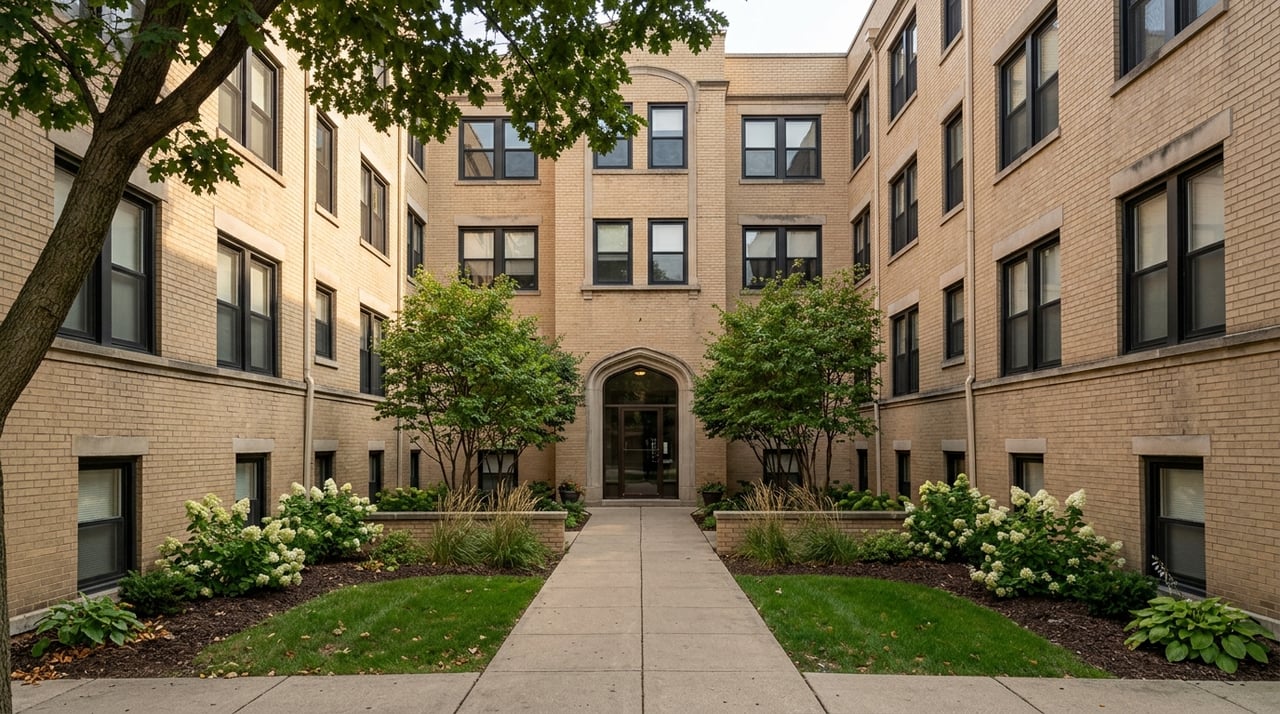
If you have ever walked past a brick apartment building wrapped around a leafy front court and thought, that feels very Chicago, you are not imagining it. Courtyard buildings are one of the city’s most recognizable housing types, and they still stand out for the way they balance urban density with light, air, and a more human scale. If you are thinking about renting or buying one, it helps to know what daily life is really like inside. Let’s dive in.
Why courtyard buildings feel so Chicago
Chicago courtyard buildings are a classic middle-density housing style. They are usually low-rise brick apartment buildings arranged around a shared open court, which helped apartment living feel more connected to the neighborhood instead of cut off from it.
This building type emerged in the early 1890s and became much more common from the 1910s through the 1920s. Construction slowed after the Great Depression, which is part of why these buildings often feel like a preserved piece of Chicago’s architectural history.
Their popularity was tied to a bigger housing shift. In the late 19th and early 20th centuries, city housing reform focused on light, ventilation, sanitation, and healthier living conditions, and courtyard apartments fit that moment well.
What a courtyard building usually looks like
The classic Chicago courtyard building is often a three- to four-story brick walk-up with a central garden court. That open space was designed to bring nature deeper into the lot while keeping the building more intimate than a large apartment block.
In many classic layouts, each apartment faces the courtyard and stretches from the court to the rear or side of the building. That setup helps bring in daylight and gives many units a more balanced feel than you might expect from an older apartment building.
Another common feature is the smaller entry pattern. Instead of one long hallway serving many units, a classic courtyard building may have a shared entry and stair for only a few apartments, often just two per floor per entry.
How the layout shapes daily life
One of the biggest reasons people love these buildings is the light. Living rooms, parlors, and other main spaces were often placed where they could get the best views and sunlight, usually facing the courtyard or the street.
Service spaces like kitchens and bathrooms were more likely to sit toward the rear or side. That room hierarchy was intentional, and it still affects how these homes feel today.
In practical terms, that can mean your most-used spaces feel brighter and more welcoming. You may also notice more separation between rooms than you would in a newer open-plan apartment, which can be a plus or a drawback depending on your lifestyle.
The everyday vibe: private but communal
Living in a Chicago courtyard building often feels more private than living in a large corridor building. Because entries usually serve a small number of neighbors, the day-to-day rhythm can feel quieter and more familiar.
At the same time, the courtyard is a shared space. You are not getting a private yard, but you are getting a semi-public outdoor area that often adds greenery, breathing room, and a stronger sense of place.
That shared court becomes part of the experience. You may look out on trees or landscaping, notice neighbors coming and going, and feel a little more connected to the building than you would in a sealed-off high-rise.
Some buildings still have open courts facing the street, while others have added gates or fences over time. In some cases, older garden courts have even been repurposed, including for parking, so the experience can vary from one building to another.
Why vintage details matter
Part of the charm of courtyard living is the character built into many older Chicago apartments. Features like bay windows, sun parlors, sleeping porches, Murphy beds, and built-in package or milk receivers reflect an earlier era of apartment design that was focused on comfort and convenience.
These details are more than decorative. They help explain why vintage Chicago homes often feel practical, distinctive, and a little different from newer buildings.
If you like spaces with personality, courtyard buildings often deliver that in a way newer construction may not. The tradeoff is that layouts and finishes can vary widely depending on how much of the original design has been preserved.
What renters should expect
If you are renting a courtyard apartment in Chicago, the biggest draw is often the mix of charm and livability. You may find brighter rooms, a smaller-building feel, and a more neighborhood-centered experience than in a larger apartment complex.
You should also expect some classic walk-up realities. Many courtyard buildings have stairs, more compartmentalized floor plans, and shared outdoor space instead of private outdoor areas.
Because these buildings are older, no two feel exactly the same. One may have preserved vintage features and landscaping, while another may have been updated heavily and feel more like a hybrid between old and new.
What buyers should expect
For buyers, courtyard buildings are appealing because they offer a recognizable Chicago housing style with lasting character. Some have been converted to condos, which means you may be buying into a building with vintage bones but a range of update levels across units and common areas.
That variation matters. Two courtyard condos on similar blocks can feel very different depending on the original layout, the condition of the building, and how much of the courtyard and architectural detail has survived over time.
If you are comparing options, it helps to focus on the features that most affect daily life:
- Natural light in living spaces
- Number of stairs and ease of access
- How the shared courtyard is maintained and used
- Whether the floor plan feels comfortably separated or too closed off for your needs
- How much vintage detail remains in the unit and common areas
Who tends to love this housing type
Courtyard buildings tend to appeal to people who want a neighborhood-scale home in the city. They offer density without the scale of a high-rise, which is a big reason they remain so popular in many established Chicago neighborhoods.
You might especially enjoy this housing type if you value:
- Bright rooms in an older building
- Classic Chicago architecture
- A smaller-building feel
- Shared green space instead of tower amenities
- Character-rich homes with vintage details
If you prefer fully open layouts, elevators, or a more private outdoor setup, a courtyard building may feel less aligned with your day-to-day needs. The best fit often comes down to how you want your home to function, not just how it looks from the street.
How to evaluate a courtyard home
When you tour a courtyard apartment or condo, look beyond the charm factor. A beautiful brick façade and landscaped court can create a strong first impression, but your everyday experience will depend on the layout, light, and shared spaces.
Pay attention to where the main rooms face and how much natural light reaches them. Notice how many neighbors share the entry, whether the courtyard feels open or enclosed, and how the building balances privacy with community.
It is also smart to compare one courtyard building to another instead of assuming they are all alike. This is a housing type with a clear identity, but there is plenty of variation in entries, exposures, height, updates, and outdoor space.
If you want help finding the right fit, The NextGEN Group can guide you through Chicago rentals, condos, and multi-family options with local insight and a people-first approach.
FAQs
What is a Chicago courtyard building?
- A Chicago courtyard building is usually a low-rise brick apartment building arranged around a shared open court, often designed to bring in more light, air, and greenery.
What does daily life feel like in a Chicago courtyard building?
- Daily life often feels more private than a large hallway-style building but more communal than a detached home because you usually share an entry, stair, and courtyard with a smaller group of neighbors.
Are Chicago courtyard apartments brighter than other older apartments?
- Many can feel brighter because the classic layout was designed to place main living spaces where they could get better sunlight and courtyard or street views.
What should renters know about Chicago courtyard buildings?
- Renters should expect charm, smaller-building living, and shared outdoor space, along with common walk-up features like stairs and more separated room layouts.
What should buyers know about Chicago courtyard condos?
- Buyers should know that courtyard condos can vary a lot based on building condition, preserved architectural details, unit layout, and how the shared courtyard and common areas have been maintained.
Why are courtyard buildings important in Chicago architecture?
- They are considered one of Chicago’s signature middle-density housing types because they helped the city add housing while keeping apartment living connected to neighborhood scale, light, and ventilation.